
"Countries all over the world"
2000 article(s) found

About WBC
About the WBC World Barista Competition (WBC) is a leading international coffee competition. Jointly sponsored by the European Special Coffee Association and the American Special Coffee Association, it focuses on promoting coffee culture and improving the professionalism of baristas. This year's golden age let audiences from all over the world set off wave after wave of the best parts in the local and various regions. Every year, from more than 50 countries around the world
The third China Mangshi (International) Coffee Culture Festival was successfully held.
From December 7 to 9, Dehong Prefecture, Yunnan Province successfully held the third China Mangshi (International) Coffee Culture Festival. Coffee merchants and domestic businessmen from all over the world not only came to visit and negotiate, but also held coffee cup competitions with coffee experts and merchants from all over the world. What is different from previous years is that this year's cultural festival also invited experts and scholars from Portugal, Thailand and other countries to attend the international festival.

Coffee training Culture an inventory of traditional Coffee drinking methods in 10 countries in the World
A kind of coffee, different people have different ways to drink coffee, now let's take a look at how coffee is drunk all over the world. 1. Italy: it is a kind of espresso in a small cup, which can be cooked and drunk quickly. People who have been in contact with the coffee for a long time can get used to its heavy taste. 2. France: the French prefer light coffee, which is usually moderately roasted and roughly ground
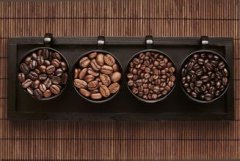
Boutique coffee beans growing at Linna Manor in Nicaragua, one of the poorest countries in Central America.
Among them, in Costa Rica, where the government strictly controls the use of water, coffee farmers have created honey treatments named to retain different thicknesses of flesh, including yellow honey and red honey, the thinnest layers of flesh, and black honey, the famous owner of the former Costa Rican COE champion La Brumas de Zurqui. Traditionally, Nicaragua is

Which countries grow coffee trees? how much fruit does a coffee tree have?
The fruit of coffee grown contains two seeds, namely coffee beans. The two beans are connected face to face with each other on one side of the plane. Each coffee bean has a thin outer film, which is called silver skin, and its outer layer is covered with a yellow outer skin, called endocarp. The whole coffee bean is wrapped in a sticky pulp to form a soft pulp.
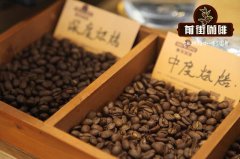
African coffee production in which countries the best of the world's three major coffee producing African coffee beans produced
Professional coffee knowledge exchange More coffee bean information Please pay attention to coffee workshop (Weixin Official Accounts cafe_style) Appreciation coffee trees from all over the world are a genus of Rubiaceae in botany. Coffee trees are native to subtropical Africa and some islands in southern Asia. In the 16th and 17th centuries, the Dutch bought through Venetian merchants and maritime hegemony.

[charm Yunnan World sharing] where is Foreign Minister Wang Yi's favorite coffee?
I drank coffee from Yunnan. Just now this film introduces that 95% of China's coffee comes from Yunnan, not only China, but also a large number of coffee raw materials from Yunnan are also exported to Nestle and Starbucks. The coffee brand I just drank is called Hougu. I am not exaggerating this coffee, it is the best foreign minister Wang Yi who has traveled all over the world and drank coffee from all over the world at the promotion meeting.

Nicaraguan coffee
Flavor characteristics: moderate acidity, fragrant and delicious. Nicaraguan coffee of high quality is in the forefront of coffee beans in the world and enjoys a good reputation. Its particles are moderate in size, mild in taste and very aromatic and mellow. Nicaragua is located in central Central America, bordered by the Pacific Ocean to the west and the Caribbean Sea to the east. The highlands in the north and the coastal plains in the east are part of the Central American volcanic belt. East flat

Varieties with mild taste, very aromatic and mellow flavor and taste in Nicaraguan coffee manor
Nicaragua is now one of the poorest countries in Central America. Due to its poor economic foundation, the coffee industry is still relatively backward, while coffee farmers are in extreme poverty. Fortunately, Nicaraguan coffee has received some foreign aid funds to improve the quality of its coffee. Coffee from Madagelba, Sinodega and Segovia in Nicaragua

A brief introduction to the cultivation of Nicaraguan boutique coffee beans with citrus, geographical location, climate and altitude
Nicaragua is now one of the poorest countries in Central America. Due to its poor economic foundation, the coffee industry is still relatively backward, while coffee farmers are in extreme poverty. Fortunately, Nicaraguan coffee has received some foreign aid funds to improve the quality of its coffee. Coffee from Madagelba, Sinodega and Segovia in Nicaragua
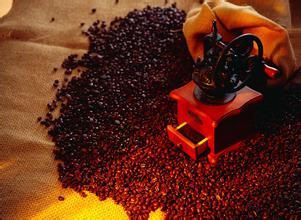
Why is Colombia the world's largest exporter of washed coffee beans?
Why is Colombia the world's largest exporter of washed coffee beans? The National Coffee Management Association of Colombia, like the National Management Association of Kenya, is a model of coffee organization. Compared with other producing countries, Colombia is more concerned with developing products and promoting production. It is this, coupled with its superior geographical and climatic conditions, that makes Colombian coffee good in quality and taste.
Brazil, the world's largest coffee producer and exporter
Brazil is famous all over the world for its high quality and strong taste of coffee. It is the largest coffee producer and exporter in the world and is known as the coffee kingdom. Coffee originated in Ethiopia in Africa and was introduced into Brazil in 1727. Brazil is located in the southeast of South America, located in the tropics and subtropics, the unique geographical and climatic conditions are suitable for growing coffee, coupled with cheap labor, coffee growing industry is booming. one

Nicaraguan Coffee country introduces Lemon Tree Manor in Matagalpa
Nicaragua is one of the major coffee-producing countries, producing high-quality coffee. Even coffee from the Antigua Mountains of Guatemala, which is famous in Asia, imports raw beans from Nicaragua. Although Nicaraguan coffee is not famous in Asia, Nicaragua coffee is already famous all over the world (Starbucks has many cooperative coffee farmers in Nepal), while several coffee-producing countries in Central America
The way people drink coffee in all countries
People all over the world drink coffee in different ways, but if you ask how many ways to drink coffee, I'm afraid no one can tell. It can be said that there are many ways to drink coffee in as many countries as there are in the world. 1/3 people in the world drink coffee, but it seems that no two countries drink coffee in the same way.

Coffee Culture of various countries British Literary Cafe
It is known all over the world that English people are addicted to tea. But from the mid-17th century to the early 18th century, the whole of London was soaked in coffee instead of tea. British men switch from drinking to drinking coffee, or both. When they get drunk in a pub, they go to the cafe to sober up with caffeine and then go to the pub to continue drinking. The first coffee shop in England, which appeared at Oxford University in 1650, was a

A brief introduction to the History and Culture of the Origin and Development of Boutique Coffee in Nicaragua
Coffee is a pillar industry in Nicaragua, producing nearly 100,000 tons of coffee beans every year. Many people who have tasted Nicaraguan coffee usually think that it is no different from Salvadoran coffee or Honduran coffee. It is full-bodied, smooth and delicate, with a slightly bitter finish, like a faint taste in a wine. In many countries, coffee production will be seriously affected for political reasons.
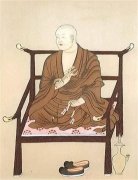
What is the traditional Japanese tea ceremony? the three ancestors of the Japanese tea ceremony and the interpretation of cultural and historical stories
Tea is an important part of Japan's long history and culture. This popular drink has been consumed all over Japan for centuries, and it is still popular among Japanese. It is believed that tea entered Japan from China, and China is the real birthplace of all kinds of tea. Tea culture originated in China and spread to Asian countries and other parts of the world. The art of Japanese tea
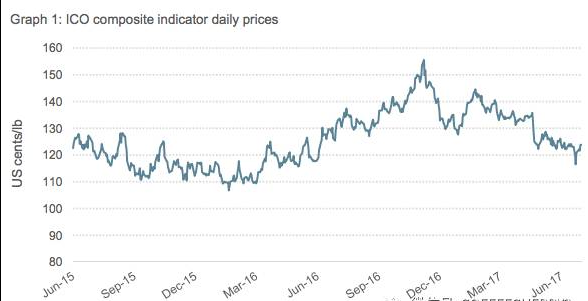
ICO 2017.6 Market report "Arabica prices are temporarily under pressure, Robusta benefits"
As the price of Arabica is as unstable as a somersault, the transaction price of Robustad rises. Total world coffee exports remained strong in June, with a total of 10.9 million bags, an increase of 8.8 percent over the same period last year and the highest stock reserves among all importing countries. So although there is a worrying possibility of a frost in Brazil in July,

Introduction of Colombian Huilan Coffee Flavor description, Grinding characteristics, treatment method, Fine Coffee
Compared with other producing countries, Colombia is more concerned with developing products and promoting production. It is this, coupled with its superior geographical and climatic conditions, that makes Colombian coffee excellent in quality and delicious and famous all over the world. The status of coffee in Colombia is evident in the following example: all vehicles entering the country must be sprayed and sterilized so as not to inadvertently cause disease and damage coffee trees.

A brief introduction to the treatment method of grinding degree and baking degree of Nicaraguan boutique coffee beans with mellow flavor
In many countries, coffee production will be seriously affected for political reasons. Nicaraguan coffee industry is no exception. The 1979 revolution forced coffee planters to flee to Miami. A period of indecision followed, when the government considered whether to redistribute land (including many plantations), which led to a shortage of coffee and a decline in production since the early 1970s